The Challenge
Businesses were spending 3–4 hours daily manually responding to customer reviews across multiple platforms. This led to delayed responses, inconsistent brand voice, and missed opportunities for customer engagement and reputation management.
Key Pain Points Identified
Manual review monitoring across 15+ platforms was time-consuming
Inconsistent brand voice in responses across different team members
Delayed responses led to customer dissatisfaction
No centralized system for review analytics and insights
Difficulty scaling review management as the business grew
Phase 1: Research & Discovery
Duration: 3 weeks
Interviewed customer support and marketing teams to understand review workflows and challenges
Audited review platforms like Google, Facebook, Yelp, and TripAdvisor to identify integration requirements
Analyzed existing response templates for tone consistency and gaps
Reviewed third-party tools used for ORM (Online Reputation Management)
Mapped the current review response journey and highlighted bottlenecks
Phase 2: Strategy & Planning
Duration: 2 weeks
Defined a centralized dashboard architecture to bring all platforms into one unified view
Prioritized features like AI-generated replies, sentiment tagging, and multi-user roles
Created user flows for core actions: monitor, respond, approve, analyze
Set success metrics such as response time reduction, brand voice consistency, and platform engagement.
Phase 3: Design & Prototyping
Duration: 5 weeks
Designed low-fidelity wireframes for dashboards, inbox, review cards, and analytics
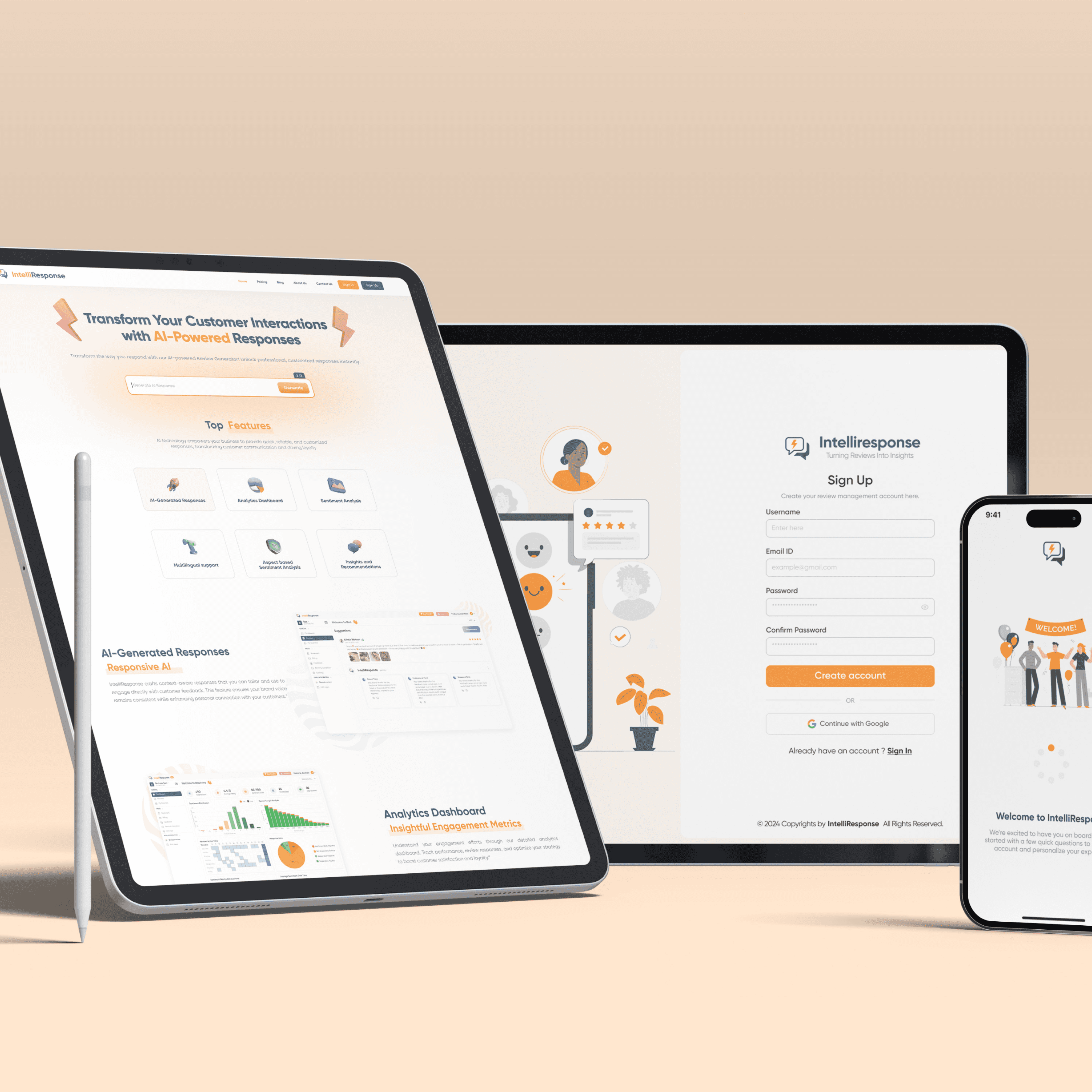
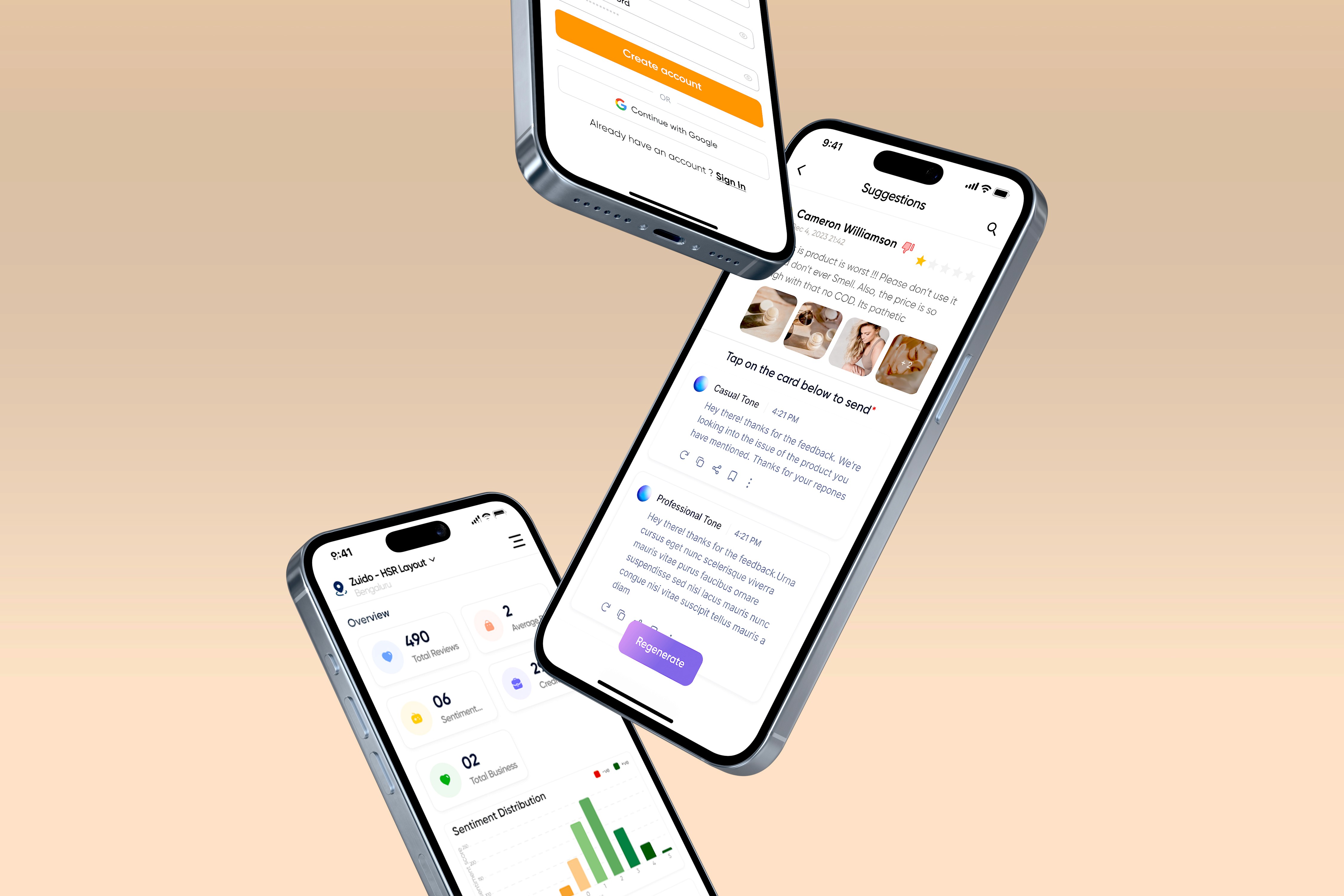
Built high-fidelity mockups with a clean, professional UI suitable for enterprise use
Developed clickable prototypes for internal testing and stakeholder walkthroughs
Designed for responsiveness across desktop, tablet, and mobile
Added micro-interactions for AI suggestions, sentiment highlights, and bulk actions
Phase 4: Testing & Iteration
Duration: 3 weeks
Conducted usability testing with 10 customer support professionals
Validated tone-matching of AI-generated replies through A/B testing
Collected feedback from product, marketing, and tech teams
Iterated designs to improve user navigation and system feedback
Phase 5: Implementation Support
Duration: 4 weeks
Worked with developers to ensure integration with external review APIs
Provided specs, components, and icon assets for development
Performed design QA for all key user flows
Supported beta testing and monitored feedback for post-launch enhancements
Key Solutions & Impact
I helped transform the manual review response process by creating a centralized, AI-powered platform. The AI-generated reply system reduced response effort by 45%, while real-time sentiment analysis helped prioritize critical reviews. The unified inbox streamlined multi-platform management, improving operational efficiency. Our consistent tone and approval workflows ensured brand integrity, and the new analytics dashboard empowered teams with actionable insights, increasing engagement by 32%.
Key Learnings from the Project
This project emphasized the value of AI-assisted workflows in reducing operational load. I learned how vital brand tone consistency is across large teams and platforms. Creating an intuitive dashboard UI for non-technical users was a key challenge that taught me to simplify complexity without limiting functionality. Most importantly, I discovered that review management is not just a support task—it’s a powerful engagement and trust-building tool.
Future Enhancements
Moving forward, I plan to introduce multi-language AI responses to support global businesses. Adding a review escalation system for negative sentiment will allow proactive engagement. I also aim to integrate CRM and ticketing system connections for seamless follow-ups. Lastly, developing automated insights and trend detection will help businesses turn reviews into strategic opportunities.